
A Plant Sociability Research Journey Example
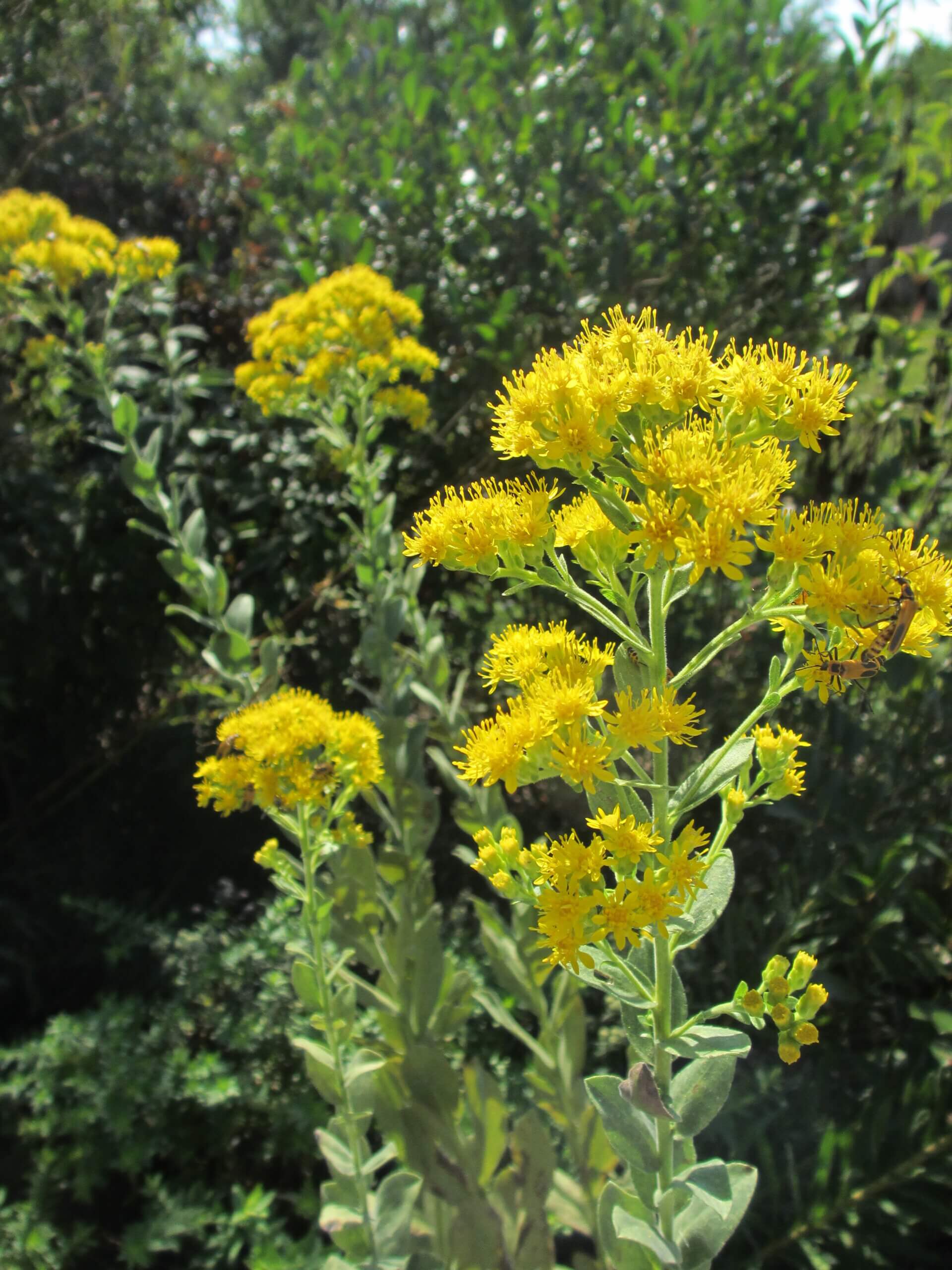
Oh that’s a cool plant, stiff goldenrod, Oligoneuron rigidum. I wonder if that would work in my garden. Maybe it’s
I don’t know who that Michael Green financial analyst guy is who looked at one county in NJ to state that the poverty line is not $32,000 for a family of 4 there, but nearly $100,000 beyond that ($130,000 or so), but the dude has hit a nerve with lots of folks. Obviously, you might be in another part of the country where cost of living might be lower, say $100,000 or $90,000 for a family of four, but the larger point still holds — many benefits that “poor” families need they can’t get because they are not below the federal poverty level, a metric set in a bygone era with bygone realities and costs.
Why am I talking about this on a garden page? First, it’s all related. In my next book I discuss how home ownership is the middle class’s main way to generate and pass on intergenerational wealth, especially as home prices are 3-4x what they were 40-50 years ago, and how passing on that wealth is — due to home mortgage practices prior to the 1980s (actually still today but I digress) — is more likely if you are white.
We all lament on why more folks don’t convert lawns around their homes to something more sustainable and healthy, and maybe part of the reason is because how this society is structured means there’s little disposable income. And that income might go to gardens only if the homeowner is truly passionate about it; they might be more passionate about a vacation or painting supplies or golfing. Or daycare. Or eating.
Our society (mega rich folks in power) benefits from everyone else being beaten down, broken down, on the edge, dependent on stagnant wages and no upward mobility in order to use up the labor capital to generate more obscene wealth for a class that is borderline psychotic on a James-Bond-villain level.
How can we think about gardening or health or climate or extinction when we’re in a rat race just to make end’s meet? It’s by design. While I’m a proponent of universal basic income — just look at how extending the child tax credit at the beginning of our most recent pandemic briefly lifted some 50% of kids out of poverty — worked miracles; a UBI wouldn’t have to be much.
But then we also need universal healthcare NOT tied to employment. Of course, why would a ruling class want that — how would it benefit rigid hierarchies — if we were more comfortable and had more time to get invested in issues that would perceptibly strip wealth from the ultra wealthy. Hey, look, most of us don’t actually share in the benefits of our labor — so we already don’t have fair distribution.
I do not think it’s far fetched to say that in most areas of the country the poverty line is well above $30,000 or so. It’s impossible for one person to live on that even if they crash on a friend’s couch or in a car. Certainly, it’s much harder to pull yourself up by the bootstraps if you aren’t able to save money or build equity. And that’s where home ownership outstrips renting — in the latter you can’t build equity, and making rent payments doesn’t help your credit score. Plus, home ownership entails other benefits like tax credits and a predictable monthly payment.
So again, if we expect less lawn and more planet in suburbs and other areas, one of the larger issues isn’t necessarily saying “lawncare poisons kids and pets” or “mowers burning fossil fuels pollute the air” or “we’re in a mass extinction” (although we gotta keep saying those things). Who cares. In order to care, we have to address deeper systemic issues that prevent us from gaining awareness, standing up, fighting back, and fighting for one another and all species. And the reason we can’t gain awareness or fight back is because we’re in a system that needs us beaten down, broken, working hard for scraps, silent, and obedient as the mega rich keep on extracting and polluting their way to a privilege that will only buy them some time as the climate collapses. The system also needs us angry at one another vs building a coalition of empathy and solidarity, but I digress again.
I probably don’t hammer this point home enough in the new book, and by the time it prints I’ll have learned more and wished I could have said something else (always the case), but I started that conversation. Because if we’re not looking at the systems that privilege lawn monoculture — itself a mode of keeping us compliant through legally enforced totalitarianism — then we’re not going to achieve the lasting change this planet, and our families, desperately needs.
Prairie up. In all the ways.
Oh that’s a cool plant, stiff goldenrod, Oligoneuron rigidum. I wonder if that would work in my garden. Maybe it’s
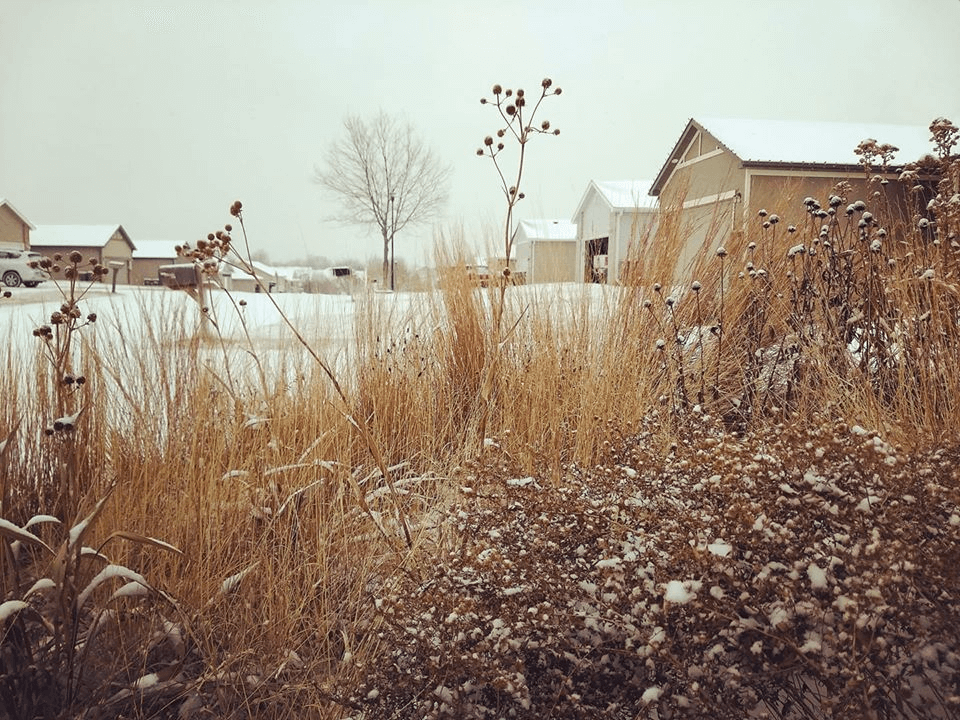
Sometimes we might think a garden left standing over winter isn’t as pretty, even though we know the ecosystem value
FREE Lawn-to-Meadow Starter Guide
+
A Special Offer
practical tips — deep thoughts — monthly Q&A — discounts